BlueMotionTechnologies

For a cleaner, greener driving future

Our BlueMotionTechnologies let you enjoy driving while knowing you’re helping to lessen your impact on the environment. The badge already identifies the cleanest, most eco-friendly cars in our range: now we’re extending it to cover all our innovative energy saving and fuel efficient technologies, such as the DSG dual-clutch gearbox and TSI and TDI engines. Why? Because when the car you drive is efficiently designed there’s no need to give up on driving excitement while being kinder to the environment.

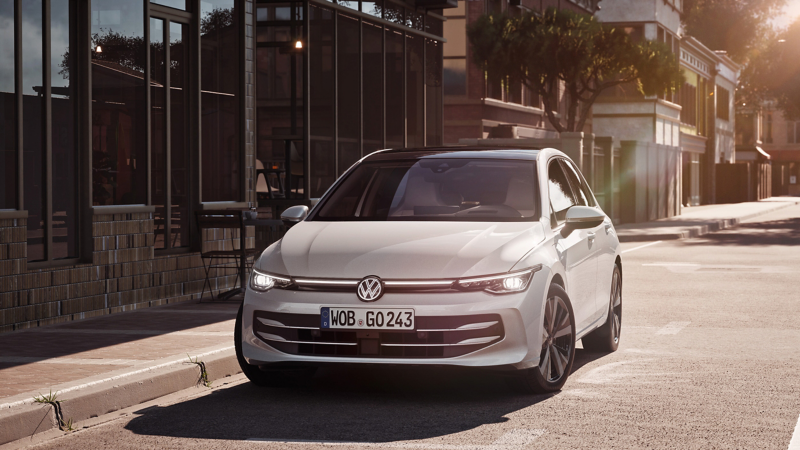
BlueMotion Golf

So when you see this logo you can expect industry-leading technologies that increase efficiency, reduce emissions - and cut the cost of your driving. BlueMotionTechnologies demonstrate Volkswagen's commitment to the future.

You can feel good about driving a BlueMotion Volkswagen, knowing you've made a thoughtful choice for the environment. But straight away you'll also notice the difference to your pocket. With BlueMotion you could:

  • Save on fuel. The new Golf BlueMotion delivers an impressive 68.9mpg. Fewer visits to the pumps resulting in lower fuel costs.
  • Save on tax. The new Golf BlueMotion, with CO2 emissions of 107g/km, is in Band B with a tax duty of just £35 a year. Compare this to the annual road tax bill of more than £400 for the most highly polluting cars.

Why BlueMotionTechnologies?

Blue - the Volkswagen colour - symbolises the elements water and air, while Motion represents a move forwards towards the future. BlueMotionTechnologies have one very important aim: to reduce the impact of our cars on the environment for future generations.

Our engineers are constantly striving to produce cleaner, more efficient cars that still offer great performance. The result of their work is an impressive range of refinements and innovations that save fuel and cut CO2 emissions. We've grouped these all together under the badge of BlueMotionTechnologies. So the environmental technologies of today are meeting the driving challenges of tomorrow.

At the heart of BlueMotionTechnologies are our advanced TDI & TSI engines and DSG dual-clutch gearbox.

TDI engines

Our Turbocharged Direct Injection (TDI) diesel engines are responsive and fun to drive, as well as being very efficient. They offer more power, good fuel economy and lower emissions. We've achieved this by:

  • Linking the engine to longer gear ratios to cut revs and improve fuel economy.
  • Developing new engine management software that reduces idling speed.
  • Fitting a highly efficient Diesel Particulate Filter to cut emissions.

Find out more about TDI


TSI engines

Our acclaimed TSI engines use 'turbocharging' technology to combine the benefits of petrol and diesel power units. Smooth and quiet on the road, they deliver high torque throughout the speed range with no turbo lag. How do they do this? The answer's simple:

  • The engine is smaller, lighter and more efficient than the standard petrol engine.
  • Direct petrol injection is combined with a turbocharger, or with charge compression generated on some engines by a supercharger working in tandem with a turbo.

The result is maximum pulling power on demand, even at very low engine speeds. That means effortless driving enjoyment and lower fuel consumption.

Find out more about TSI


DSG dual-clutch gearbox

Our DSG dual-clutch gearbox offers the ease and comfort of an automatic with the responsiveness and economy of a manual. Available in 6-speed and 7-speed versions, it has two clutches with electronically controlled gear selection for seamless, split-second gear changes. It offers:

  • Fast, smooth gear changes.
  • Lively handling with unbroken acceleration.
  • Less fuel used, the economy can be better than a manual gearbox.

Find out more about DSG dual-clutch gearbox


Other technologies

We've also designed a range of other energy-saving technologies to work in synergy with our advanced engines and gearboxes. Together, they improve fuel economy and cut harmful emissions to reduce the impact of driving on the environment. At the same time, this increased efficiency helps cut the cost of running your car.

We are constantly developing new and innovative technologies, so not all of the technologies described below will be available on all our BlueMotion cars. If you want to find out more about a specific model please visit the new cars section of our website, refer to the brochure, or talk to your local retailer.

Automatic Start/Stop

Driving in towns involves a lot of stopping and starting, waiting in queues or at traffic lights. And while your engine is ticking over, it's using fuel. Our efficient Start/Stop technology, introduced on the Passat BlueMotion, stops this waste, cutting CO2 emissions and saving fuel.

The Start/Stop system means your car can virtually stop its engine by itself. It works through the clutch, so when you come to a standstill, you just select neutral gear, release the clutch and the engine switches off with a Start/Stop symbol appearing on the dashboard. When you want to move off again you simply dip the clutch, the engine restarts and you can select first gear and pull away. The system can easily be deactivated, if you wish, by a switch within easy reach.

Recuperation

When you're trying to save energy while driving it makes sense to recover it where you can. VW uses improved alternators and batteries in combination with an energy management system, to store kinetic energy that would normally be lost during slowing down or braking. The unutilised alternator voltage during slowing down or braking is used to add extra charge to the battery during this period. This extra battery charge can then be utilised during acceleration or starting, instead of drawing all the energy from the alternator, thus placing less of a burden on the engine and reducing fuel consumption. Recuperation is a feature of some of our BlueMotion cars.

Tyres

We fit low rolling resistance tyres to most of our BlueMotion models. They need less engine power to move the car forward, saving fuel and helping to cut emissions, while still offering excellent performance.

Gear ratios

Manual gearboxes with optimised gear ratios are another way of saving fuel. The longer gear ratios for the higher gears reduce consumption. The lower engine speed also cuts noise - both for those in the car and those outside it.

Fuel saving also depends on how the car is driven and some BlueMotion models are fitted with a system that indicates a recommended gear, giving you the opportunity to adjust your driving style for greater economy.

According to the driving situation, the intelligent engine management recommends the most efficient gear in the multifunction display. An arrow pointing upwards tells you to move up a gear, and an arrow pointing down recommends a lower gear. If the gear already selected is the best one for the current speed, a dot appears.

Aerodynamics

The smoother the airflow over your car as it goes forward, the less drag there is holding it back and the less effort is needed to move the car forward. That means better performance and lower fuel consumption. That's why we are constantly optimising the aerodynamics of our cars.

How we've achieved this:

  • The body is more streamlined and gaps between panels are narrower.
  • Headlights and indicators are combined.
  • Radiator grilles, underbody panels and spoilers are designed to reduce drag.

Be an eco-friendly driver

You don't have to own a BlueMotion car to be an eco-friendly driver. Follow these fuel-efficient tips and you'll help reduce the amount of CO2 your car emits and save fuel at the same time. That helps you - and the environment.

Your green driving checklist:

  • Check tyre pressures. Under-inflated tyres are dangerous and waste fuel.
  • Keep the weight of your car to a minimum. Clear out your boot, remove the roof rack if you're not using it. The heavier your car, the more fuel it burns.
  • Drive smoothly. Avoid sharp acceleration and heavy braking - it saves fuel and reduces the risk of accidents.
  • Check your speed. Driving at 70mph can use up to 15% more fuel than driving at 50mph, according to the Government's Act on CO2 campaign.
  • Fewer revs means less fuel used. If you drive a diesel car, change gear before it reaches 2000rpm. Or 2500rpm for a petrol car.
  • Turn off on-board electrics, such as air-conditioning, when you can.
  • Plan your journey to avoid traffic jams, roadworks and getting lost. Try combining your trips or sharing journeys with others.
  • Service your car regularly. Poorly running cars are likely to emit higher levels of CO2.
  • Don't warm up the engine after starting. It causes rapid engine wear and uses unnecessary fuel. Just drive off immediately.
  • If you don't have our new Start/Stop technology, switch off your engine whenever possible (for example, in traffic jams). Most sources today agree that it is worth turning your engine off if you expect to be stationary for 10 seconds or more.