How Does an Electric Car Motor Work?
What is an electric car motor?
An electric car motor is the “engine” of an electric vehicle. It replaces the traditional internal combustion engine by converting electrical energy from the cars battery into motion to drive the wheels.
Turning electricity into rotation
When electricity flows through the coils inside the motor, it creates electromagnets. These newly formed electromagnets have distinct poles, which want to move closer to opposite poles, and push away identical poles (North repels north. South attracts north). As these poles interact with other magnetic fields in the motor, invisible pushing and pulling forces are generated. This invisible force is what causes the rotor to spin, which then forces the wheels to turn.
The two main parts — rotor and stator
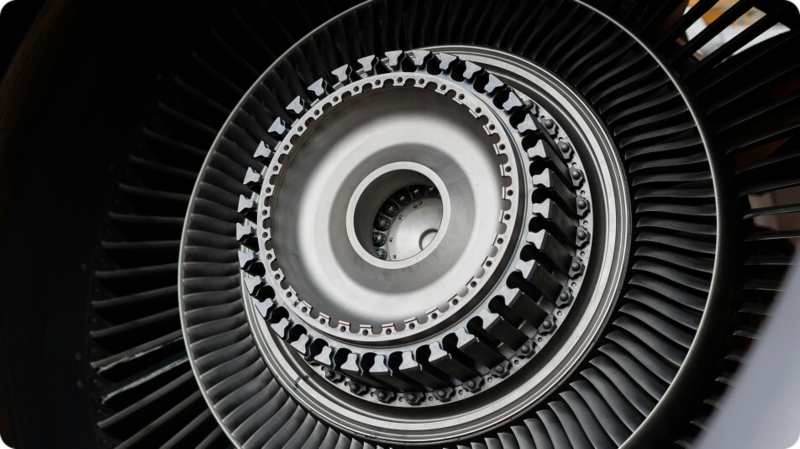
There are two main parts to an electric motor, the rotor and stator. The stator is the stationary outer ring of the motor, which is fixed directly to the motor casing. This part consists of an iron core wrapped with hundreds of tightly wound copper coils. When electricity flows through the stator, it creates a powerful magnetic field that rotates. This magnetic field propels the rotor, and its rotation prevents the rotor from being held in place. The rotor is the central spinning component of the motor, which is mounted inside the stator. The rotor consists of a central shaft that’s connected to the car’s drivetrain and is surrounded by permanent magnets or electromagnets. The magnetic field generated by the stator interacts with the magnets on the rotor. This magnetic push-and-pull force is what causes the rotor to rotate. Since the rotor is constantly chasing the shifting magnetic fields, it spins at incredibly high speeds.
How does an electric motor actually drive the wheels?
When electrical energy flows through an electric motor it generates incredible rotational force, or torque. That rotational force is then used to rotate the wheels and propel the vehicle.
From battery to inverter to motor
Electrical energy is stored in the high-voltage battery of an EV as Direct Current (DC). This electrical energy is then converted into Alternating Current (AC), allowing it to power the electric motor. Once the electrical energy is flowing through the motor, the rotor spins rapidly, and instantly generates rotational energy or torque. That torque is applied to the wheels and road, through a single speed transmission and axle.
Why EVs deliver full torque from zero rpm
EVs can deliver full torque from zero RPM because they rely on electromagnetism, which instantly generates maximum torque from a standstill.
Why most EVs don’t need a multi-speed gearbox
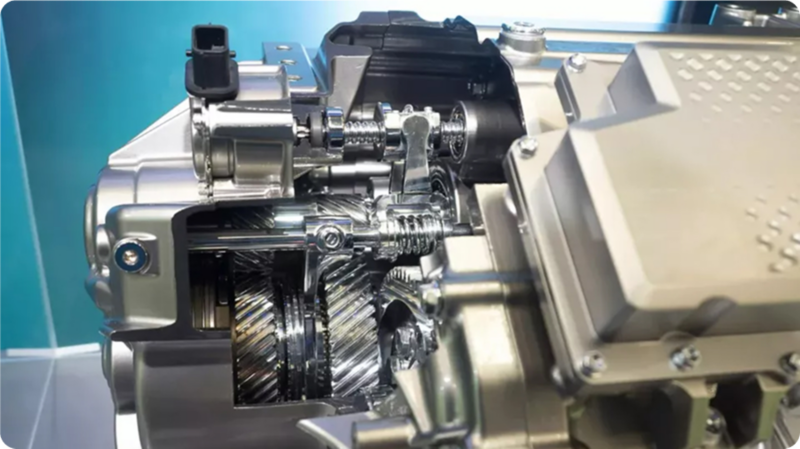
Most EVs don’t require a multi-speed gearbox because electric motors can be used within a much wider speed range than internal combustion engines. With an electric motor, maximum torque is available from a standing start, which provides full traction right away. This explains why models with an electric drive do not need a clutch or a gearbox. Generally, an efficient reduction gear with a fixed ratio or single gear is used. On top of that, electric cars don’t necessarily need a separate gear for reverse because electric motors can move in both directions.
What types of electric motors are used in EVs?
Today, modern electric vehicles have synchronous or asynchronous motors fitted. The difference lies in the way the rotor works: in a synchronous motor, the rotor follows the rotating magnetic field of the stator at the same rate – synchronously. By contrast, in an asynchronous motor, the rotor follows the stator with a delayed action, hence asynchronously. Synchronous motors have the benefit of higher power and torque density. The design of asynchronous motors is somewhat simpler and cheaper to manufacture, because they don’t require any rare-earth materials and the control electronics are less complex. However, electric vehicles with asynchronous motors are larger, heavier, and therefore less efficient.
Permanent magnet synchronous motors (PMSM)
Permanent magnet synchronous motors are often used in electric cars like the ID.3. The Volkswagen PMSM is compact and comparatively light, with the motor block weighing less than 90kg including the gearbox and power electronics. The key strength of a PMSM is its efficiency, which is over 90 percent in most driving situations. When you’re driving, the power electronics convert the DC power from the lithium-ion battery to AC power for the electric motor, and when you’re using regenerative braking, it does the opposite to function like a generator.
Induction motors (asynchronous motors)
An induction motor or asynchronous motor is an AC electric motor that relies on electromagnetic induction to create rotational torque. When the stator is connected to an AC power supply, it produces a rotating magnetic field (RMF). This RMF sweeps across the stationary rotor bars, inducing an electric voltage and current. This induced current produces its own magnetic field which interacts with the stator’s field, forcing it to turn. For this induction and torque to occur, the rotor must be spinning slightly slower than the RMF. This difference in speed is known as slip. These types of motors are extremely durable, and cost effective compared to DC or permanent magnet motors. We use this kind of motor on the front axles of our AWD models that are built on the MEB platform.
Externally excited synchronous motors (EESM)
Instead of relying on permanent magnets made from rare earth metals like a PMSM, an Externally Excited Synchronous Motor (EESM) uses electromagnetic coils, and relies on electrical excitation to generate magnetic fields. This is done with a brush/slip ring, or a brushless transmitter to pass current to the rotor core. When an electric current is applied to the copper rotor windings, they become electromagnets, and it operates with the efficiency and power of a traditional magnet motor. By eliminating the need for these rare earth metals, EESMs are less taxing on the environment, and less expensive to produce. The other benefit of EESMs is their ability to adjust magnetisation with an electrical current. This allows the motor to be adjusted to improve efficiency across a wider range of driving speeds.
PMSM vs induction motor: which is better for an EV?
Neither motor is objectively better to use in an EV, but they both have unique strengths and benefits. PMSMs are better for maximising efficiency and driving range, while Induction motors (IM) are better for affordability and sustained high-speed performance.
Efficiency at typical driving speeds
When driving at low speeds (0-40 mph), PMSMs are much more efficient than induction motors. This is because PMSMs use permanent magnets, they don’t waste energy by constantly magnetizing the rotor. But once you get up to highway cruising speeds (50-70+ mph) induction motors can outperform PMSMs due to their freewheeling capability.
Cost, weight and rare-earth materials
Permanent Magnet Synchronous Motors (PMSMs) are smaller and lighter than Induction motors, but they still heavily rely on rare earth metals, which makes them more expensive to produce. On the other hand, Induction motors are magnet-free and therefore cheaper to produce, but they are heavier and less efficient at low speeds.
Why many EVs now use one of each
Permanent Magnet Synchronous Motors (PMSMs) are smaller and lighter than Induction motors, but they still heavily rely on rare earth metals, which makes them more expensive to produce. On the other hand, Induction motors are magnet-free and therefore cheaper to produce, but they are heavier and less efficient at low speeds.
How efficient is an electric motor compared with a petrol engine?
Electric motors are far more efficient than petrol engines. A petrol engine only converts 20% to 30% of the fuel’s energy into motion, where an electric motor can convert 85% to 97% of the electrical energy from the battery into motion.
Typical EV motor efficiency
Typically, the efficiency of an EV motor is between 85% and 95%, with peak efficiency reaching 97%. This peak efficiency usually occurs during sustained moderate speeds. Something else that helps to improve the overall efficiency of EV motors is regenerative braking, which can recover 60% to 70% of the vehicle’s kinetic energy. Things like heavy acceleration, low-speed stop-and-go driving as well as sustaining extremely high speeds can all reduce efficiency.
Typical petrol engine efficiency
The typical efficiency of a petrol engine is between 20% and 35%. This means that 65% to 80% of the potential energy is lost as heat, friction and exhaust.
What this means for running cost and range
Running Costs
The overall running costs for EVs are much lower than petrol cars. EVs require maintenance less frequently, their first year of road tax is £10, and it’s cheaper to charge an EV at home than filling up a petrol car.
Road Tax
Although road tax is no longer free for electric vehicles, the first year of road tax on new EVs is much less than it is for petrol and diesel vehicles. Your first year of road tax in a new EV is only £10, but for combustion vehicles, it’s based on the CO2 emissions. This means that low polluting cars will pay moderate fees, while high polluting cars will pay much higher fees. After the first year, both combustion and electric vehicles pay the standard rate of £195.
Insurance
When it comes to insurance, electric vehicles can cost anywhere from 10% to 20% more to insure than vehicles with internal combustion engines. This is largely because electric vehicles feature high voltage battery systems and advanced electronics, which are more expensive to repair and requires specialised technicians. The exact cost of a policy depends on many factors, such as regional classes, years of no claims bonus, age, number of drivers and the car model.
Range
While EVs have the advantage with running costs and road tax, petrol cars still have a greater range. On average our Petrol cars can get up to 500 miles on a single tank which means you could drive from Southampton to Liverpool and back. Whereas our EVs have an average range of 350 miles, which means you could drive from Southampton to Middlesbrough on a single charge.
Do electric cars need gearboxes?
Most EVs don’t have a complex gearbox like petrol cars do, they often feature a single-speed reduction gear instead. The reduction gear helps to convert the high-speed spinning of the electric motor down to a speed that safely turns the wheels. When it does this, it’s also multiplying the torque, which easily meets the needs of most vehicles for acceleration and top speed.
Why a single-speed reduction gear is usually enough
Electric motors can be used at speeds between 0 and 10,000 rpm, which is a much wider range than internal combustion engines. Electric motors can also provide maximum torque from a standing start, and they’re capable of moving in reverse without a separate gear.
Where two-speed transmissions are appearing
Two-speed transmissions are making a comeback in high performance electric vehicles. The first gear is designed for quick acceleration from 0 to 60 mph, while the second gear optimises efficiency and top speed.
How regenerative braking replaces engine braking
Instead of relying on friction like traditional braking, regenerative braking turns the kinetic energy of the vehicle back into energy for the battery, while slowing the vehicle.
How much maintenance does an electric motor need?
While electric motors require less maintenance than ICE vehicles, they still require an inspection service every 2 years. During this, things like the battery, charging cables, brakes and software systems will be checked to ensure optimal performance, and reliability.
Moving parts: an EV motor vs a petrol engine
A petrol engine contains far more moving parts than an EV motor. An EV motor has about 20 moving parts, but a petrol engine contains anywhere from 1,000 to 2,000 moving parts.
What can wear out?
The most common things to wear out in an electric motor are the bearings, seals and cooling system. Since EV motors don’t feature many moving parts, it’s unsurprising that the largest moving part, the rotor bearings shoulder, is the most common wear item. They wear out due to normal friction, but they can wear out even faster with aggressive driving. If you notice a high-pitched whine, grinding or humming noise coming from the drivetrain, it may be the rotor bearings shoulder.
Seals keep the high-speed motor protected from the outside environment, and they keep the transmission and cooling fluids contained. Since they’re exposed to friction, high temperatures, as well as expanding and contracting fluids, they can crack or warp overtime. If you notice fluid leaking out of the motor or the transmission casing, it could be caused by a seal failure.
Modern EV motors generate a lot of heat, and they rely on complex cooling systems to avoid overheating. Over time coolant can degrade and lose its anti-corrosive properties. Cooling pumps and radiator fans can also suffer from electrical or mechanical failures. If the motor enters a limp mode or shows a high-temperature warning, it may be a cooling system failure.
If you’re concerned about any sounds or alerts coming from your vehicle, reach out to your local Volkswagen service Retailer. They’ll be more than happy to help.
Expected lifespan of an EV drive unit
Electric motors are incredibly reliable and require minimal routine maintenance. All our new EVs come with a 3 year, 60,000-mile warranty, which includes the electric motor. But these motors can last up to 20 years or 500,000+ miles, which would easily outlast the rest of the vehicle.

How powerful are electric car motors?
Electric car motors are incredibly powerful for their size, instantly delivering torque. This high-power density is what allows EVs to out accelerate gas engines while weighing significantly less.
Single-motor, dual-motor and tri-motor setups
The number of motors in an EV defines its power delivery, traction, and intelligent handling capabilities.
Single motor
The ID. 3, ID. 4, ID. 5 and ID. Polo are all available with a single motor setup, which is where one motor is placed on either the front or rear axle and drives two wheels. Single motor setups are typically between 150 bhp and 300 bhp, providing a responsive and zippy feel. This setup is the lightest, which helps to maximise range.
Dual motor
The ID. 4, ID. 5, ID. 7 and ID. Buzz are all available with a dual motor setup, which is when a motor is placed on both the front and rear axles, providing electric AWD. These setups can range from 350 bhp to 500 bhp, providing massive power and high traction.
Tri motor
A tri-motor setup, which we don’t currently offer, features three motors total, one on the front axle and two separate motors on the rear. This setup is found in ultra-high-performance trucks and hypercars, producing 800 to 1,000+ bhp. The tri-motor setup is the pinnacle of high-performance electric vehicles.
How power is split between front and rear axles
In a multi-motor EV, power can be managed and distributed dynamically by a computer. This means the power can always be distributed in the most efficient way. While cruising on the motor way it might be an 80:20 or 100:0 rear-to-front split, and when you accelerate or corner, that split instantly becomes 50:50.
Common terms explained
Here’s some handy definitions for common terms when talking about electric motors.
Stator, rotor and inverter
Stator
Derived from the word “stationary”, the stator is the fixed outer ring that’s wrapped in copper wire coils. When an electric current flows through these coils, a powerful, rotating magnetic field is generated.
Rotor
The rotor is the internal component in an electric motor that spins. The rotor, which sits inside the stator, is pushed and pulled by the magnetic field from the stator, which forces it to spin.
Inverter
The inverter converts Direct Current (DC) to Alternating Current (AC), and it constantly adjusts the frequency and the voltage of the electricity supplied to the stator. This allows the motor to speed up, slow down and reverse safely.
Synchronous vs asynchronous
Synchronous means happening at the same time.
Asynchronous means happening independently, or at different rates.
In a synchronous motor, the rotor moves along with the rotating magnetic field of the stator at the exact same rate. The rotor is in sync with the stator, hence synchronously.
In an asynchronous motor, the rotor follows behind the stator’s magnetic field. The rotor is out of sync with the stator, hence asynchronously.
kW vs bhp
Kilowatts or kW are the global standard for measuring power, how quickly energy is converted into movement.
Brake horsepower or bhp is the imperial measurement of the actual useable power produced by the motor before any losses occur.
Both kW and bhp used to measure the power of a motor, which determines how fast a vehicle can accelerate, and its top speed. You can calculate the power of an engine by multiplying the torque by the revolutions per minute (RPM) of the motor.
Conversions:
• 1 bhp ≈ 0.746 kW
• 1 kW ≈ 1.34 bhp
• This means a 150-kW motor is roughly 201 bhp.
Nm vs lb-ft
Nm stands for Newton-meters, which is the metric unit for torque. This unit of measurement describes the turning force applied to a lever that is 1 meter long.
Lb-ft
Pound-feet (lb-ft) is the imperial measurement for torque, which described the turning force applies to a lever 1 foot long.
Nm vs lb-ft
Both units are used to measure torque or rotating force. This represents the force used to turn the wheels, how hard you’re pushed into your seat, your towing capacity, or your ability to climb hills.
Conversion:
• 1 lb-ft ≈ 1.356 Nm
• 1 Nm ≈ 0.738 lb-ft
• This means 400 Nm of is roughly 295 lb-ft.
Frequently asked questions about electric motors
Get answers to frequently asked questions about electric motors.
What’s the difference between a BLDC motor and a PMSM?
Why do some EVs sound like a spaceship?
Can an EV motor be repaired or does it have to be replaced?
Do electric cars have one motor or two?