XTL diesel fuel
Find out if your diesel engine is approved for paraffinic fuel
What is XTL fuel?
Paraffinic fuels are diesel fuels that are newly available at filling stations. If these fuels are produced from green energy and sustainable raw materials, the release of greenhouse gases (CO2) is reduced. The reduction potential arises from the fact that no long-term CO2 is released into the atmosphere, as is the case with fossil fuels. The law requires that paraffinic fuels release at least 70% less greenhouse gases. The manufacturers of these fuels report a reduction of up to 90% in greenhouse gases.
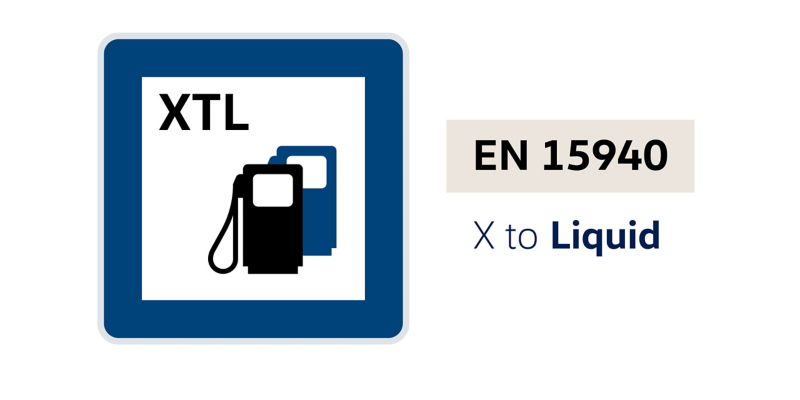
In accordance with the European standard 15940 (country-specific prefixes possible, e.g. DIN.), paraffinic or synthetic diesel fuels are referred to as XTL fuels. The abbreviation XTL stands for “X to Liquid”: a raw material “X" is converted into a liquid energy source (“to Liquid”). As XTL can be produced from various raw materials, there are different types . The “X” is therefore a placeholder for the raw material used from which the standardised quality fuel XTL is produced with the addition of hydrogen.
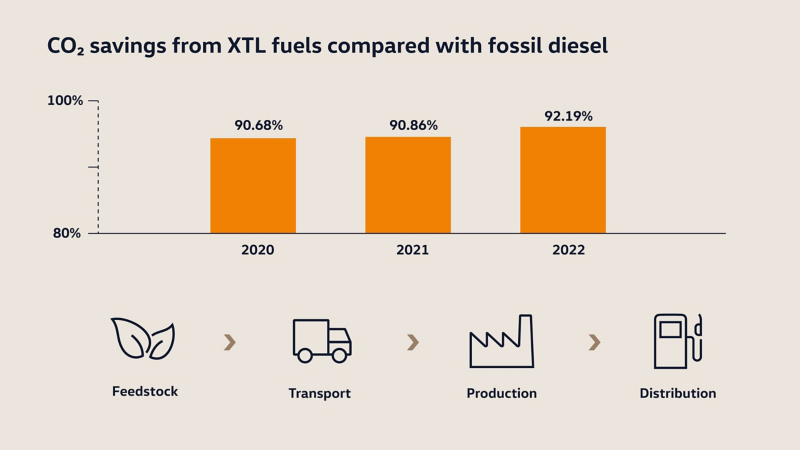
The graphic shows the significant reduction in emissions that is already achieved today by utilising XTL. In this case, through the use of HVO (hydrotreated vegetable oils).
Benefits of XTL fuel when compared with conventional B7 diesel
- Reduces greenhouse gases by avoiding the use of fossil raw materials and using green energy
- 30–50% less soot during combustion
- Free from sulphur and aromatics
- Better cold start behaviour
- Easier to store
- Less harmful in the event of soil or groundwater contamination: Classification water hazard class 1 (slightly hazardous to water) compared to diesel with water hazard class 2 (obviously hazardous to water)
Can you refuel with XTL?
All Volkswagen models with 3- and 4-cylinder diesel engines(EA288/EA288evo) from model year 2015 onwards and with emissions standard EU6 are generally suitable for the use of XTL fuel in accordance with European standard EN 15940. Vehicles with changes to the fuel system or with engine tuning are not approved for the use of XTL fuel. Please note that in such cases no warranty or goodwill can be provided by the manufacturer.
Whether you can refuel with XTL is shown in the owner’s manual or in this approval list. Using the engine code, you can directly see in the approval list whether your engine is approved for XTL. Vehicles that are approved for XTL at the factory carry an “XTL” sticker inside the fuel filler flap. If you are unsure, please contact your Volkswagen Retailer.

Fuel filler flap
Owner’s manual



Our motivation
Volkswagen is fully committed to the climate targets that have been set. That’s why we’re increasingly branching out into electromobility. But the vehicles already on the road also play an important role – if they can’t be operated as CO2-neutrally as possible, it’ll be much harder to meet these targets. As a manufacturer, we want to make it as easy as possible for our customers use our products in a way that protects the environment. The good news is that the CO2 emissions of our cars can be influenced by the fuel they use. That’s why Volkswagen is working on approving synthetic fuels that can reduce greenhouse gas emissions for existing vehicles, so that we can make a significant contribution to climate action.
FAQ on XTL fuels
What types of XTL are there?
What is HVO?
How is HVO produced?
What is the difference between e-fuels and HVO?
What is the difference between B7 and XTL fuel?
Who can use XTL?
Which models can be refuelled with XTL?
Is my diesel vehicle suitable for XTL?
Where can I find the engine code?
Where can I find the model year of my vehicle?
How do I recognise which emissions standard my engine has?
How can I recognise the new diesel fuel?
What happens if I have been approved for XTL but there is still conventional diesel in the tank?