
A simple guide to charging and range
Volkswagen electric cars can go further than ever before. They charge much faster too.
Battery technology has advanced significantly. As a Volkswagen electric car owner, most of your charging will take place at home and, for everyday driving, you’ll generally only need to top up as and when it suits your driving routine – often overnight when energy tariffs are lower.


Charging your Volkswagen
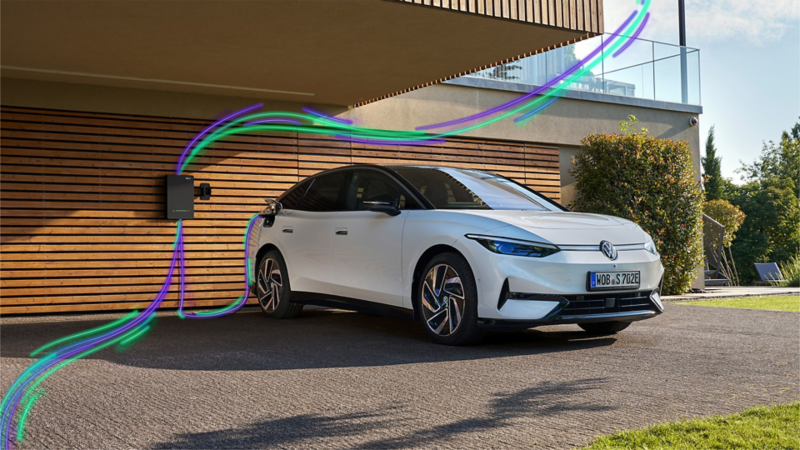
Bidirectional charging
Bidirectional charging turns your Volkswagen ID. into a flexible power storage system. It stores energy and provides it again when needed. This opens up new opportunities for you to use electricity more intelligently, reduce costs and become more independent.
Your ID. can supply power to external devices – Vehicle-to-Load (V2L) – making energy usable at home – Vehicle-to-Home (V2H) – and also feed electricity back into the public grid in the future – Vehicle-to-Grid (V2G).
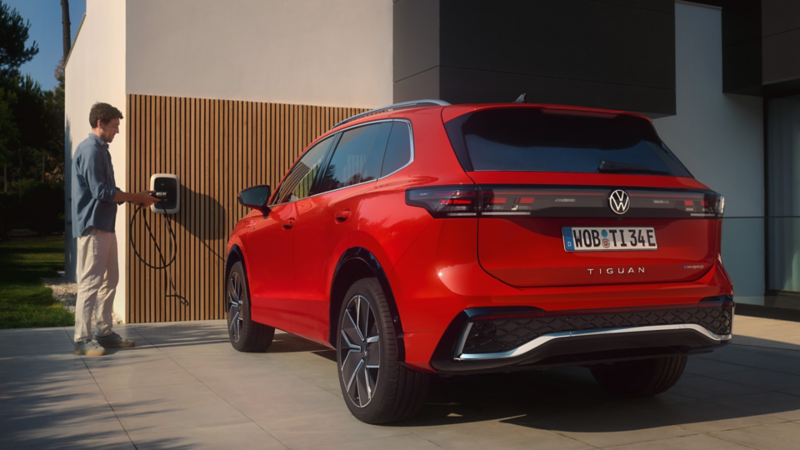
Charging a plug-in hybrid
Volkswagen plug‑in hybrid vehicles charge through a cable in the same way as our fully electric cars. The easiest way to do it is with a home wallbox, which makes overnight charging simple and can help you make the most of lower electricity tariffs.
You can also charge at public charging stations when you’re out and about, including rapid chargers for a quicker boost. If needed, a standard household socket can be used too. Because plug‑in hybrids have smaller batteries than fully electric cars, they also tend to charge more quickly.
Explore our electric and hybrid range


What do you want to know about charging an electric car?
What is the range?
How do I charge my electric car?
Can I charge at home?
How do I charge on a long journey?
What is the environmental impact of an EV?
What are the best practices when it comes to charging?
What is a plug-in hybrid car?
How do I charge a plug-in hybrid car?
What are the different types of hybrid car?


