Hybrid (HEV)
Hybrid (HEV) Explained
How it works
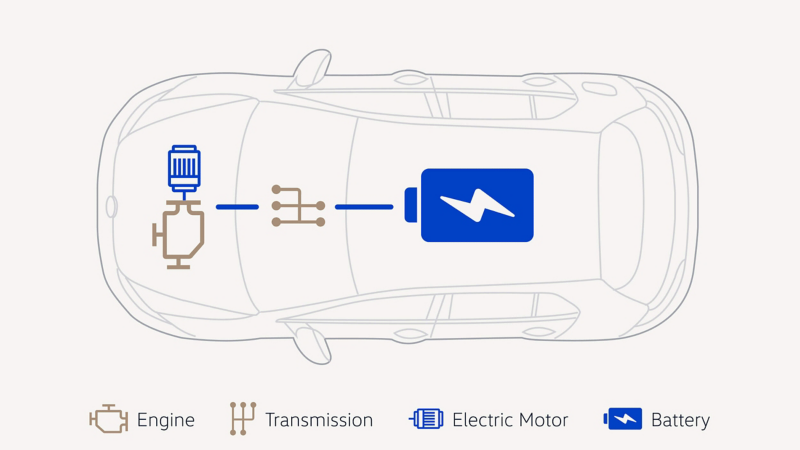
Hybrids (HEVs) use a petrol engine alongside an electric motor and battery. The system allows HEVs to operate without needing to be plugged in, as the engine maintains the battery’s charge level indefinitely. Energy recovered through regenerative braking when you slow down also helps to recharge the battery. The small electric motor then assists the petrol engine during acceleration. Unlike mild hybrids, a hybrid can also drive short distances at low speeds using electric power alone.
This means that HEVs are best for:
- Short local trips
- Moderate to heavy traffic
- Frequent stops and starts
Benefits
Driving a hybrid feels similar to driving a petrol car. You get the range and flexibility of a petrol car, along with the improved fuel efficiency of hybrid technology, without needing to plug in to charge. The battery can be recharged through regenerative braking, and the stored energy can help improve fuel efficiency or power the car in all-electric mode for short periods at low speeds. Hybrids can offer lower running costs than mild hybrids and petrol cars, thanks to their larger batteries and ability to drive in all-electric mode.
Who it’s best for
Hybrids are best if you do the majority of your driving in urban areas at lower speeds in moderate to heavy traffic. Frequent stopping and starting allows the car’s electric battery to recover energy through regenerative braking. They’re a good option if you don't have access to charging, but still want some of the benefits of electric driving.