Plug-in Hybrid (PHEV)
Plug-in Hybrid (PHEV) Explained
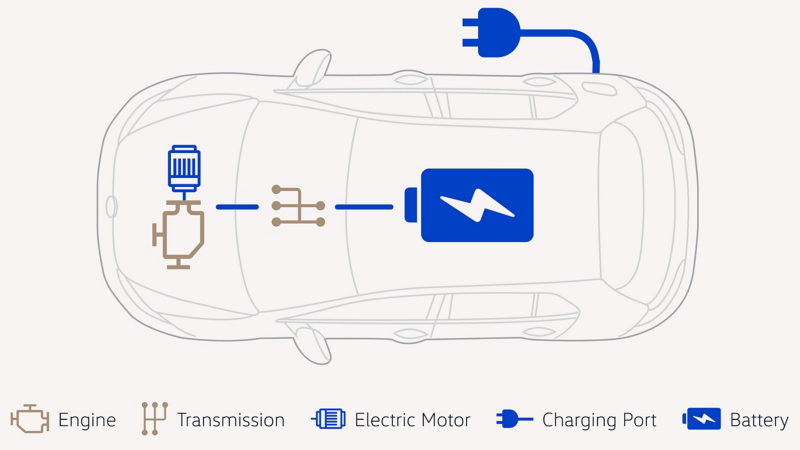
How it works
Plug-in hybrids rely on electricity to power the electric motor, and petrol to power the combustion engine. As the name suggests, plug-in hybrids need to be plugged in to charge. They can undertake most short to medium trips on all-electric mode, while providing the confidence of a petrol engine on longer journeys. Plug-in hybrids also use regenerative braking to partially recover energy while you drive.
This means that PHEVs are best for:
- Short to medium trips
- Commutes
- Longer road trips
Benefits
A plug-in hybrid provides you with maximum flexibility. They can offer lower running costs, while still having the range and flexibility of a petrol car. With a plug-in hybrid, you can make most short to medium journeys on all-electric mode, and on longer trips you can rely on a combination of both petrol and electric. A plug-in hybrid needs to be plugged in to charge, although they can also partially recover energy via regenerative braking. Plug-in hybrids can offer lower running costs compared to mild hybrids and hybrids, especially if you regularly plug in to charge at home, and your daily driving doesn’t exceed your all-electric range.
Who it’s best for
Plug-in hybrids are best for people with easy access to charging and who want the flexibility of all-electric mode for daily commutes and petrol for long trips. Plug-in hybrids can offer lower running costs compared to mild hybrid and hybrids vehicles, particularly if you can make most of your daily commutes in all-electric mode.