
How much does it cost to charge an electric car in the UK?
What it really costs to charge an EV
It can cost anywhere from 7p to 83p per kWh to charge an electric car in the UK. Your overall charging costs can vary greatly depending on battery size, driving habits, as well as where and when you charge. For a better idea of your charging costs based on your driving habits, try our Running Cost Simulator.
How much electricity does an electric car use?
If you have a daily commute of 20-miles, you’re using 6-8 kWh of battery each day. Which means over the course of a year, you’d be commuting 5,200 miles, and using 2,080 kWh of electricity. The exact electricity usage of your car will vary depending on your speed, driving habits and the weather. Driving at higher speeds significantly increases your energy consumption, because of wind resistance. Rapidly accelerating uses more power than smooth gradual acceleration, and climate control like heating and cooling increases the energy being drawn from the vehicle battery.
What affects the cost of charging an electric car?
Good habits
help you save
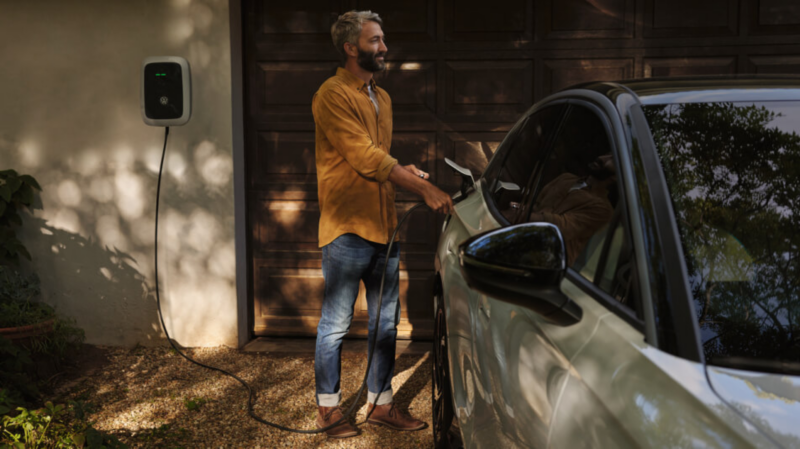
The cost of charging depends on various factors. Do you charge up your vehicle at your home socket or wallbox? What does your provider charge for electricity? Do they offer a special EV tariff or off-peak rate? Do you have the option to use a private charging station at your work? Or do you regularly use public charging stations because you travel a lot and often drive long distances? What is your average speed? All these factors play a part in the question of cost, and so does your electric car's consumption.
What’s the difference between kW and kWh?
While they seem similar a kW and a kWh measure different aspects of electricity. A kW measures the rate at which an appliance uses electrical energy at any given moment, like the speed your vehicle is traveling at in mph. While a kWh is the total amount of energy used over any period. You can multiply kW by the number of hours an appliance has been on to get the total energy used in kWh.
For example:
If a 60-kW appliance was left running for 2 hours, it would have used 120 kWh (60kW x 2 hours = 120 kWh).
This is the same as calculating the total distance travelled on a drive. If you drive at a speed of 60 mph for 2 hours, you will travel a total of 120 miles (60 mph x 2 hours = 120 miles).
Put simply a kW is the speed at which an appliance consumes power, and a kWh is the total energy used by that appliance over a given period of time.
Is it cheaper to charge an electric car at home or at a public charger?
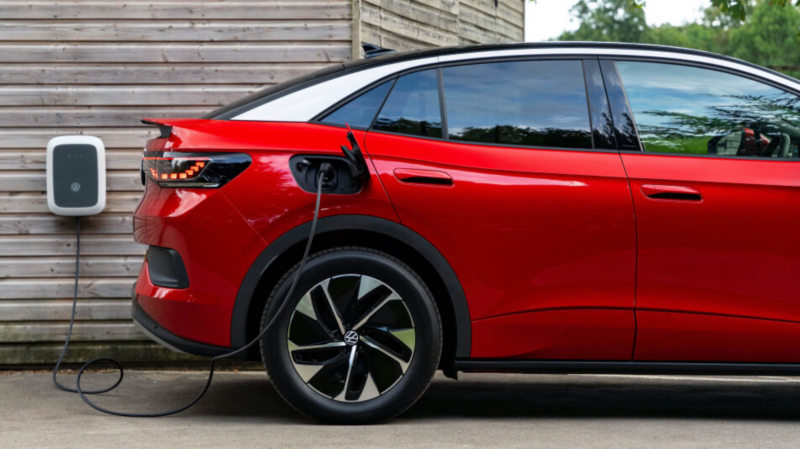
Yes, it is significantly cheaper to charge an electric car at home. Charging at home gives you more control over your electricity rate. Using a public charger can be 2 to 4 times more expensive than charging at home. Plus, if you’re able to charge with an off-peak tariff at home, you can reduce your charging costs even further.
How much does it cost to charge an electric car at home?
Home charging is the most cost-effective way to charge, and it costs 25p per kWh on average. But with a specialty EV charging tariff from your energy provider, you can pay as little as 7p per kWh. You have two options when you charge at home, you can charge with a 3-pin plug, or a wallbox. This choice can affect your charging speed and cost.
Charging on a 3-pin plug vs a home wallbox
There is no difference in charging cost between a 3-pin plug and a home wallbox with the standard tariff.
3-Pin
A 3-pin charger can be plugged into a regular wall socket and offers charging speeds between 2.3 and 3 kW. It would take almost 24 hours to get a 60kWh battery from 10% to 80%. With a 3-pin charger you’re not able to access any special EV tariffs or off-peak rates. On a standard tariff you’ll be paying between 24p and 28p per kWh.
Wallbox
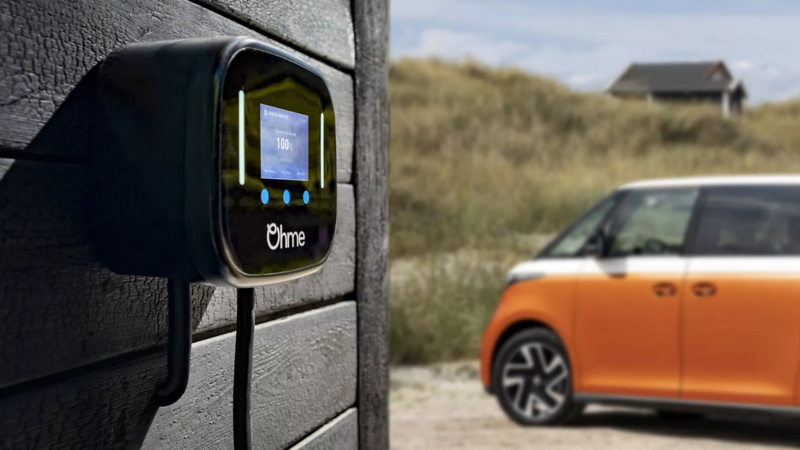
A wallbox has a charging speed of 7 kW, which means you’d be able to charge from 10% to 80% in just over 6 hours. The other benefit of having a wallbox is the special EV tariffs and off-peak charging rates, which can be as low as 7p per kWh. We've made charging at home cheaper and greener by teaming up with Ohme, who are on a mission to speed up the global transition to clean energy by providing an easy-to-use smart charging system. Learn more about Ohme and installing a wallbox.
Is it cheaper to charge your car at night?
It can be cheaper to charge your car at night, depending on your energy provider. Some providers offer a reduced off-peak rate, while others have an EV tariff that you can access whenever you charge.
How much does it cost to charge an electric car at a public charging station?
When you need to
charge, you need to
charge
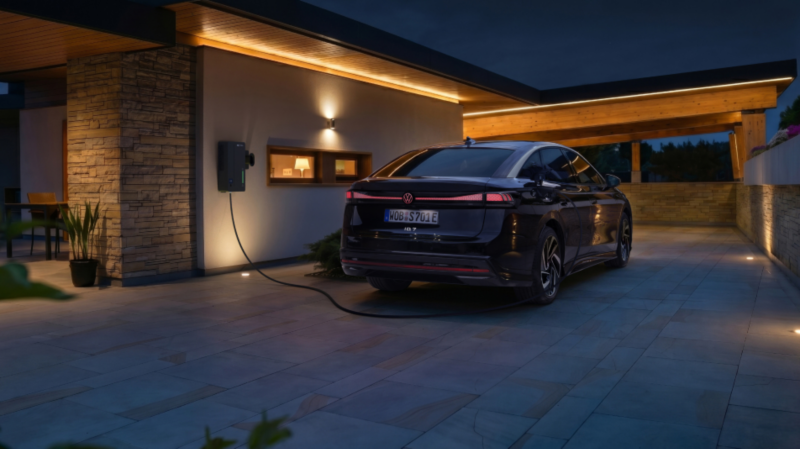
The cost of public charging varies based on your location, charging speed, and how you pay. The most expensive way to pay for public charging is pay-as-you-go. But with a WeCharge subscription you can benefit from discounted rates at IONITY charging stations. Your location will also affect the charging speeds available, and the overall cost of charging. Higher charging speeds tend to be more expensive, but they also get you back on the road faster. Public charging stations can have slow, fast, rapid or ultra rapid charging speeds, which range from 3kW to over 150kW.
Slow and fast public chargers
Slow and fast are the most cost-effective public chargers.
Slow
Slow chargers can be between 3kW and 7kW, and are most common in residential areas, by lamp posts, or with on-street parking. Slow charging from 10% to 80% would take anywhere from 12 to 20 hours based on exact output and battery size. Prices vary by charging network, location and charging speed.
Fast
Fast Chargers can be anywhere from 7kW to 22kW, and are often found at supermarkets, in public car parks, and at motorway service stations. A 20-kW fast charger could fill your battery from 10% to 80% in 2 hours and 15 minutes depending on battery size. Prices vary by charging network, location and charging speed.
Rapid and ultra-rapid chargers
Public Rapid and Ultra-rapid chargers are more expensive than slow and fast chargers, but they fill your battery much faster.
Rapid
Rapid chargers are usually between 50 and 149kW, and are often found at motorway service stations, in major retail parks, and at dedicated charging hubs. Using a 50kW charger you can fill your battery from 10% to 80% in less than an hour, depending on battery size. Prices vary by charging network, location and charging speed.
Ultra-rapid
Ultra Rapid chargers are the most expensive chargers to use, but they take the least time to fill up, making them ideal for getting back on the road as fast as possible. You can often find them at motorway service areas, electric charging hubs and large retail or leisure parks. With a 150-kW charger, you’ll only need 26 minutes to get from 10% to 80% battery, depending on battery size. Prices vary by charging network, location and charging speed.
How to reduce the cost of charging your electric car?
There are plenty of ways to reduce charging costs. Charging at home is much cheaper than using public charging stations, especially if you’re able to take advantage of a special EV tariff through your energy provider. The We Charge app is the relaxing way to charge at home or on the road. There are 250,000 compatible public charging points throughout Europe, including IONITY fast-charging stations on major motorways. For more information about We Charge click here.
Is charging an electric car cheaper than petrol or diesel?
Yes, charging an electric car is usually cheaper than petrol or diesel. But it all depends on your driving and charging habits. If you’re able to do most of your charging at home, then it is much cheaper than petrol or diesel. If you rely on public charging stations frequently, then it can be the same or more than petrol or diesel. To find out if charging is cheaper than petrol or diesel based on your driving habits, visit our Running Cost Simulators page.


