
Smarter charging solutions for businesses and drivers
Powering the move to electric
When making the move to electric driving, it's important to start with the right charging strategy. For Fleet Managers and drivers, the correct infrastructure can ensure a smooth transition – whether charging at work, from home or on-the-go.
There are a number of speeds to choose from:
Workplace charging
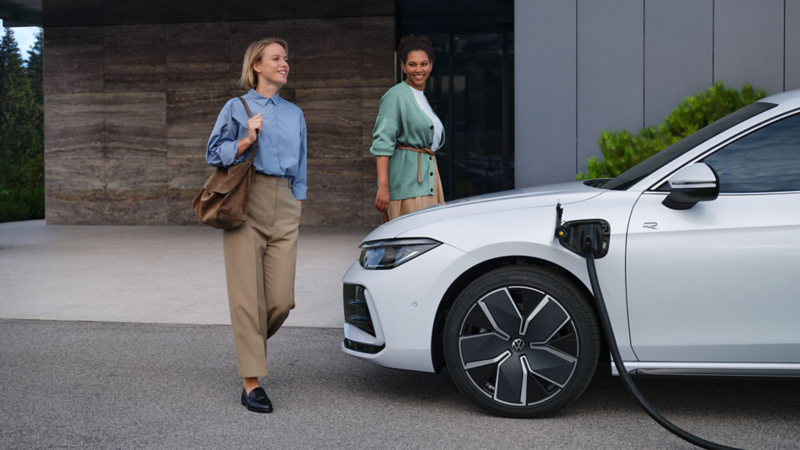
Charging solutions for businesses and drivers
If you manage a fleet and offer EV charging for employees, it’s important to have the right workplace infrastructure. To do this, there are a few things to consider:
Stakeholders and permissions
Involve facilities, HR and finance early. For leased properties, get your landlord’s approval to avoid delays.
Defining the use cases
Consider how the charging will be used day in, day out. How far do employees travel? Do vehicles need rapid charging? Are cars parked for long periods?
What types of chargers do you need?
Choosing the right charger type is vital for both efficiency and cost management.
Rapid chargers are great for topping up quickly but can be more expensive. Meanwhile, AC chargers often meet workplace needs at a lower cost.
How many charge points are required?
You can determine how many chargers are needed by assessing the number of employees, vehicles and parking spaces, while planning for future growth.
Home charging
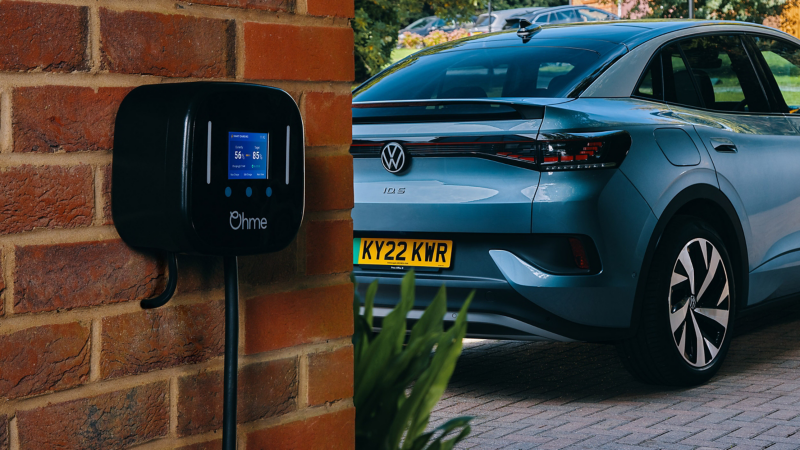
Convenient and cost-effective charging at home
Smart charging solutions
Smart chargers - like those from Ohme, Volkswagen’s official partner - help reduce costs with off-peak charging. Ohme also makes managing and accurately reimbursing home charging repayments to employees straightforward via its Fleet Portal.
Not all drivers will have access to off-street parking, though, which limits their ability to charge at home at the lowest possible rates.
However, there are new and developing solutions emerging that will help to meet increased demand for EV charging. These include lamppost chargers, usually installed by local authorities.
Others – like Gul-e and Kerbo Charge – involve installing recessed channels in pavements. These house charging cables allow drivers without off street parking to charge their vehicles safely.
Tax incentives
Employers offering free workplace charging will incur zero BiK (Benefit-in-Kind) tax, as electricity isn’t classed as vehicle fuel.
Public charging
Power up anywhere with reliable on-the-go charging
Beyond the workplace and home, drivers are also likely to rely on the UK’s growing network of public chargers. As of March 2026, there were more than 119,000 public chargers in the UK, according to Zapmap.
While these are operated by several different providers, charging cards can simplify things by giving drivers access to multiple networks with one card. This also streamlines reimbursement for fleet managers – consolidating expenses into a single monthly invoice.


